links

title

Pachter's Pointers:
Business Etiquette Tips & Career Suggestions


Showing posts with label Public speaking. Show all posts

3.24.2019

6 Tips To Enhance Your Presentation Skills…And Build Your Confidence

"I just spoke to 200 people; I can do anything!”

This comment was from a woman I had coached on presentation skills. She had been nervous about speaking during a fund-raising luncheon for her favorite charity, but felt “on top of the world” after giving the presentation.
                                             
She was experiencing one of the positive consequences of giving an effective speech – her confidence level increased considerably, and she felt good about herself.

This woman was an accomplished professional and needed only a few suggestions to fine-tune her skills. But anyone can benefit from some of the tips that I gave her. Why not try them out before your next presentation? You may be surprised at how good you feel about yourself as a result.   

1. Practice out loud. You want to hear how your presentation sounds. Saying it in your head isn’t good enough. Is it structured logically? Are you using transitions between points? Are the stories complete? Does the presentation make sense? Saying it aloud, and hearing the speech as your audience will hear it, helps to clarify any areas that need work.

2. Mingle before the presentation. When you can, go up to people, shake hands, introduce yourself, and welcome individuals to the presentation. This rapport-building helps people connect with you, and allows you to feel more comfortable with them once you are in front of the group.

3. Ask yourself: Does the audience know I am nervous? If you are not verbally or nonverbally conveying your nervousness to the audience, the people you are addressing will not know. And if the audience doesn’t know you’re nervous, why waste your energy being nervous? Interesting concept… and it has helped a lot of people overcome their nervousness.

4. Look at people. When you make eye contact with members of your audience, you appear confident and in control of the presentation and your audience. Presenters get nervous and tend to avoid looking at the people they are addressing. Make sure you look at everyone. People have a tendency to look only at the people who smile at them (and we do love these people!), but you don’t want to miss connecting with anyone. 
                                       
5. Manage the questions. In the beginning of your talk, let people know when you will be taking questions. You can often direct people to ask questions on a specific topic by saying, “What questions do you have about X?” Repeat each question before you answer it. This gives you a few seconds to compose your thoughts before you speak. You can also rephrase the question to eliminate any negativity in it. 

6. Take the applause. I am sure you have seen speakers who have almost run off the stage at the conclusion of a presentation, or they may say something like, “Whew, glad that is over!” Do not do this. You should acknowledge the applause, then walk off the stage or go back to your seat with your head held high.

Additional suggestions on presentation skills can be found in my book, The Communication Clinic: 99 Proven Cures for the Most Common Business Mistakes.

Pachter & Associates provides training and coaching on presentation skills and communication. For more information contact Joyce Hoff at joyce@pachter.com or 856.751.6141.


10.08.2018

Need to prepare a presentation quickly? Follow these 7 guidelines


I was just given an assignment to present at a community meeting, but I have very little time to prepare. What should I do?

This question was asked by one of my students, and it brings up a communication dilemma – how do you put together a presentation when you don’t have a lot of time to prepare?  This task can baffle the best of us. But there’s no need to panic. Here are some suggestions to put together a presentation quickly:   

1. Think about your audience. Who are they? How much do they already know about your topic? What more do they want to know? If you address the needs and concerns of the people in your audience, they are more likely to listen to you.  

2. Define your objective and the key points quickly. You don’t have time to waste. People often spend too much of what little time they have agonizing over these items. Make a decision and get started. You can now focus on what you want to convey to the audience. (Additional information on structuring your presentation can be found in my book, The Communication Clinic: 99 Proven Cures for the Most Common Business Mistakes.) 


3. Consider whether you have any stories to support your key points. Stories bring your presentation to life. Keep them succinct and to the point. Your audience will remember the story, and as a result, they’ll also remember the message in your presentation.


4. Practice out loud. Have at least one practice. You want to hear how the presentation sounds.  


5. Pay attention to your delivery. You want to appear confident and credible – even if you are uncomfortable. Use good posture, and look at people in the audience. Don’t sway. Avoid nervous fiddling, such as playing with a pen or rubber band. Dress slightly better than your audience, and speak loudly enough to be heard. 


6. Don’t discount yourself. Avoid comments that belittle you or your talk. These include such statements as, “I hope I don’t bore you; I didn’t have a lot of time to put this together…” or “I know you didn’t come here just to hear me.”  


7. Anticipate the questions. Once the presentation is together, spend just a couple of minutes thinking about the questions that you may be asked. Decide how you will respond to them. If you do, you are less likely to be caught off guard.

There is a lot more you can – and should – do to prepare for a presentation, but these quick tips will help you prepare an effective presentation when time is short.

Pachter & Associates provides seminars and coaching on presentation skills, business writing, professional presence, and etiquette. For additional information, please contact Joyce Hoff at joyce@pachter.com or 856.751.6141. (www.pachter.com)

2.18.2018

6 Tips To Encourage Questions From Your Audience


How do I get people in my audience to ask questions?
 
A vice president of a major healthcare company asked me this question during one of our coaching sessions on presentation skills.

No one had ever asked me that before!

Often presenters want to avoid anything to do with the Q&A segment of a presentation, but he wanted questions so he would know whether his audience had grasped his concepts. This desire for feedback is just one reason to encourage questions. There are others.

For example, you seem more approachable as a speaker when you take questions. Plus, how you answer the questions, and participate in any discussion that follows, can help explain and/or enhance your ideas and clarify any misunderstandings. In addition, the types of questions asked may let you know your participants’ opinions of your suggestions.

Try these 6 suggestions to encourage people to ask questions:

1. Let the audience know when you will be taking questions. Don’t assume your audience knows; tell them at the beginning of your talk. In a more informal talk or training session, participants may be encouraged to ask questions throughout. (“I’m open for questions throughout my presentation.”). Or, if the presenter doesn’t want to interrupt the flow, he or she can ask the audience: “Please save your questions until the end of my talk.”

2. Non-verbally encourage questions. Keep your body language open, and don’t cross your arms. Look at your audience. Move towards audience members when you can. Pause after you ask for questions – don’t rush to start talking. This gives the participants a few seconds to formulate their ideas. Additional information on nonverbal communication can be found in my new book, The Communication Clinic: 99 Proven Cures for the Most Common Business Mistakes.

3. Use an open-ended question. If you say to your audience, “What questions do you have?,” you are telling participants you assume that they have questions and, as a result, they’re more likely to speak up. If you say, “Do you have any questions?,” it is easy for people to say “No.” 

4. Request questions on a specific topic. You can expand on the above open-ended question and pinpoint a particular area of your presentation. For example, if you have discussed the budget, you can ask, “What questions do you have about the new budget items?” Also, asking about something you just discussed can help you transition from one part of your talk to another.

5. Have participants write their questions and submit them beforehand. This can be effective with large audiences or audiences at remote locations. You can answer some of the questions during your presentation, or refer to them at the end.

6. Be prepared with your own first question. When you ask for questions and no one speaks up, you can offer one of your own by saying, “A question I am often asked is… .” Hearing you answer a question often makes audience members feel more comfortable asking questions of their own. Or, you might consider coordinating with a participant before your presentation, and arrange for that person to get things started by asking a specific question.

This blog addresses how to encourage questions from your audience. There’s a lot more to discuss about handling questions, including how to prepare for difficult ones. But that’s a blog for another day.   

I post regularly on communication and etiquette. We can connect via LinkedIn, Twitter, Facebook or my website:pachter.com
 
About: Barbara Pachter is an internationally-renowned business etiquette and communications speaker, coach and author of 11 business books. She helps individuals communicate more effectively and enhance their professional presence. Pachter is also adjunct faculty in the School of Business at Rutgers University. (bpachter@pachter.com)  

7.10.2017

Dressing for a presentation? Choose your clothing wisely

I put on my jacket and immediately my shoulders went back and I stood up straight.

I think I need to practice in my suit. I feel more “on” when I do.


These comments, from participants in a recent class on presentation skills, demonstrate that your clothing choices can help you to project confidence and to come across as a credible person – one your audience wants to listen to. Yet attire is one of those little things that presenters often don’t think about, or plan.


You don’t want sloppy or inappropriate clothing to prevent people from really hearing and absorbing your message. Make sure to attend to the following 7 items as you prepare for your next presentation:
 

1. Dress slightly better than your audience. Think about who is going to be in the audience and what they are likely to be wearing, and then choose your clothing accordingly. Dressing slightly better than your audience adds to your credibility. And remember that wearing a jacket will usually elevate your appearance. (Additional information on the hierarchy of clothing can be found in my book, The Essentials of Business Etiquette.

2. Make sure your clothing fits you properly. You can spend a fortune on an item, but if it is too big or too small, it is not going to look good. When you are in front of a group, all eyes are on you, and an ill-fitting item becomes a distraction. If your buttons are pulling, people will notice. If your pants are too short, people may fixate on them. When in doubt, take your clothing to a good tailor.

3. Pay attention to your color choices. Darker colors usually convey a stronger impression than lighter ones. Although lighter colors may not be as powerful, they can be very appropriate, especially in warmer climates. When possible, check the wall color in the meeting room before choosing your attire. You want to stand out from the background. Though most rooms have light-colored walls, that is not always the case. When I was presenting in Las Vegas, I checked the room ahead of time and saw that the stage had been draped in black. I had planned to wear a black suit. With my dark hair and black clothing, I would have looked like a talking head! I wore a suit of a lighter color.

4. Don’t dress provocatively. Low-cut tops that expose cleavage draw attention to your chest, and are not suitable for a presentation (or in the office!). Do not show too much leg, either. Short skirts draw attention to your legs. Is that where you want people to look when you are giving a presentation? The general guideline is that skirts should fall to the top of your knees, or just slightly above. 

5. Don’t ignore your accessories. Accessories can complete the outfit, but they also can become distractions and overpower you or your clothes. Don’t play with your accessories, including twirling rings or fiddling with neckties. Also, take your name tag off when you are making a presentation. It is not a fashion piece.

6. Attend to your grooming. You want people to focus on your presentation, not on distracting details. You don’t want your audience noticing dandruff on your shirt, smudges on your glasses, lipstick on your teeth, or chipped nail polish. These flaws are especially noticeable when you are presenting to a small group. And remember that people notice shoes. Your shoes should be clean, polished, and in good condition.

7. Pay attention to your posture. Stand tall. Keep your shoulders comfortably back. You can be wearing a great outfit, but if you are slouching you are doing a disservice to your clothes. 


Pachter & Associates provides seminars and coaching on business etiquette, communication, business writing, presentation skills, and professional presence. For additional information, please contact Joyce Hoff at joyce@pachter.com or 856.751.6141. (www.pachter.com) 

11.03.2015

Giving a Presentation? 9 Ways to Answer Questions Like a Pro

I won’t give a presentation because I’m petrified about answering questions.

I don’t like giving presentations, but I really dislike the Q&A session.

I never know what to say when asked a question, and end up rambling. 


Comedian Jerry Seinfeld said, “Did you know that they say people fear public speaking more than they fear death? That means that more people would rather be inside the coffin than giving the eulogy!”

Many people fear giving presentations. Yet, as the above three quotes illustrate, there are people in my seminars who dislike the Q&A part of a presentation the most. They seem to dread losing control of the presentation, or being caught off guard.  

Effectively answering questions in front of your audience builds your credibility. Master the following points so you appear poised and confident during the Q&A:

1. Prepare for questions. As you prepare your presentation, you also need to prepare for the questions you may be asked.  Think about your topic and who is in your audience, and how they are likely to respond. Anticipate the questions and know how you will answer them.

2. Anticipate the tough questions. Think about what difficult, annoying or nasty questions you may be asked, and know how you will respond. Don’t just pray that someone won’t ask that question. Know how you will answer it.

3. Repeat the question before answering. This is hard to remember to do, but very important. You repeat the question for a number of reasons. The first is that when you repeat the question, it allows everyone to hear what was asked. You also gain a couple of seconds to get your thoughts together. And if the question is a hostile one, you can paraphrase the question and eliminate the hostility.  For example, if the question is, “How come you are spending so much money on transportation for...,” you could paraphrase and say something like, “The question concerns the transportation budget.”

4. Don’t be a puppet on your audience’s string. If the audience is shouting questions at you, make sure you repeat the question you are about to answer. If you don’t, you are being controlled by the audience as you quickly answer one question after another. When you take the time to repeat the question, you gain control of the Q&A, as you are deciding which questions to address and in what order. 

5. Look at the audience when answering the question. When you repeat the question, look at the person who asked it. But when you answer the question, look at the audience, to include them in the answer. 
 
6. Don’t know the answer? Admit it.
Even when you are well-prepared, there still may be times you are asked a question to which you don’t know the answer. When that happens, you can usually say, “I don’t know, but I will find out and get back to you.” And make sure you do. 

7. Give your Best Educated Guess. Occasionally, there may be times when you don’t know the answer, but you have to respond. You can then give what I call your Best Educated Guess. This is not lying. It’s a general response without being specific. It is saying something like, “Based on my experience (or research, or knowledge of...), I assume the following would occur....”  (But make sure it is your best educated guess – don’t go beyond the boundaries of what is plausible.)

8. Defer answering, if the answer to the question will be explained later in your talk. Often, you can say, “I am going to hold off answering that question as I will be discussing that topic in a few minutes.” Of course, if the CEO asked the question, you may want to answer it right away!

9. Don’t end abruptly. When the Q&A segment is nearing its end, prepare the audience. You can say something like, “I have time for one more question.” And after you answer that question, move on to your closing.


Additional information on presentations can be found in my book The Essentials of Business Etiquette: How to Greet, Eat and Tweet Your Way to Success

Pachter & Associates provides seminars and coaching on business presentations, writing, professional presence, etiquette and communication. For additional information, please contact Joyce Hoff at  joyce@pachter.com or 856.751.6141.

3.31.2015

Public-Speaking Challenge: Someone Is Sleeping During Your Talk!

What do you do when someone falls asleep during your presentation?

My first thought after being asked that question during a presentation-skills seminar was to recall the scene in the romantic-comedy film, Larry Crowne, where Julia Roberts throws an eraser at her sleeping student.

My second thought was, “You can’t do that in the business world!” However, since I have been asked about sleeping/daydreaming participants a number of times over the last few years, here are some alternative suggestions:

1. Don’t take it personally; sometimes people just need to sleep. A number of years ago, I had a woman sleeping in the first row of my seminar. I admit that it was a little unnerving. But she came up to me at break and said, “I am loving your seminar, but I had a migraine this morning and took my medicine, and I know at times it makes me drowsy. But I’m learning so much I want to stay, and I wanted you to know that.” I responded with a gracious, and heartfelt, “Thank you!”

2. Ask yourself: Are you making it too easy for people to doze off? Are you speaking in a monotone? Too softly? Is the room too hot? Too dark? Are your slides difficult to read? If any of these scenarios describe your presentation, some of your audience may fall asleep.

3. Walk around or near the sleeper. When you walk around your room, your activity may wake the person. Sometimes a participant sitting next to the dozing person will tap the sleeper.

4. Have you added any stories? Do not just hand out a collection of related data. Adding stories that support your information can enliven your presentation and keep your audience’s attention. To highlight the importance of the speaker’s making eye contact with the audience, I often tell the story of a judge instructing a witness to remove his dark glasses so the jury could see his eyes.

5. Call a break or have the group do an exercise. These options usually are possible during an informal presentation. Make sure you talk to the sleeper during this time to engage him or her. Additional information on presentation skills can be found in my book, The Essentials of Business Etiquette: How to Greet, Eat and Tweet Your Way to Success.

6. Ask the person a question. This can be risky. Do this very cautiously because you do not want to put someone on the spot. But if a person is just beginning to nod off or daydream, you may want to try it. Say the person’s name and then ask a question or ask for a comment, such as “Tom, you are the expert on budgeting; would you please add your comments on _____________.”

Pachter & Associates provides training and coaching on presentation skills, assertive communication and business etiquette. For additional information, please contact Joyce Hoff at 856.751.6141 or joyce@pachter.com.

1.13.2015

He’s Still Talking! The Secrets to Managing Time When Presenting

Last week’s blog talked about how anyone giving a presentation could encourage questions from the audience. Participants in my presentation skills classes or coaching sessions also have a lot of interest in learning how to judge the timing of their presentations. I often hear comments along these lines:

My speech went over time. They hated me!

I panicked when I was told to add 20 minutes to my talk!

There seem to be two major concerns:

• How do you correctly calculate how long your talk will take? Many people misjudge their timing, and either go over their allotted time, or run out of things to say.

• How do you quickly adjust the length of your talk? What do you do if you are told, shortly before you are to begin, that you have either more time, or less, than you had anticipated?

Here are four suggestions that can help you address the problems of timing:

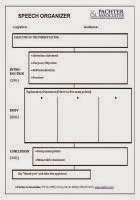
1. Prepare properly. If you have prepared what you want to say, you are less likely to ramble, which adds additional time to your talk, and you are less likely to forget material, which would shorten your presentation. In my training classes, participants use my Speech Organizer, which provides a visual representation of the parts of a speech, to structure their presentations and plan what they want to say.

2. Time yourself. Practice giving your presentation so you will know how much time your talk will take. Make it realistic. This needs to be done a couple of times so that you become comfortable with your material and your pacing. Timing your talk won’t be helpful if you are racing through it or stumbling over sections during your presentation.  

3. Know what to add or delete. Part of your preparation is anticipating time concerns, and knowing what material you can easily add to or eliminate from your talk. To add extra material, have at the ready additional research, statistics or stories that highlight your key points. The opposite approach is effective when you need to shorten your remarks. Know ahead of time what material is not crucial for your key points, and don’t discuss those items. Speaking faster is not a substitute for the elimination of material.

4. Get a signal. Arrange to have someone in your audience give you an unobtrusive signal to alert you that you have only a certain amount of time left.

If you like this post, check out the highly-acclaimed book, The Essentials of Business Etiquette: How to Greet, Eat, and Tweet Your Way to Success (McGraw Hill). Additional information on presentation skills, effective communication, and etiquette can be found in this book.

Pachter & Associates provides training and coaching on presentation skills. Contact Joyce Hoff at joyce@pachter.com or 856.751.6141.
 --An earlier version of this blog appeared almost two years ago. However, there were so many questions prompted by last week’s blog on presentation skills that I decided to update and reprise this one, which is one of my most popular blogs.

1.06.2015

6 Tips To Encourage Questions From Your Audience

How do I get people in my audience to ask questions?

Recently a vice president of a major healthcare company asked me this question during one of our coaching sessions on presentation skills.

No one had ever asked me that before! 

Often presenters want to avoid anything to do with the Q&A segment of a presentation, but he wanted questions so he would know whether his audience had grasped his concepts. This desire for feedback is just one reason to encourage questions. There are others.

For example, you seem more approachable as a speaker when you take questions. Plus, how you answer the questions, and participate in any discussion that follows, can help explain and/or enhance your ideas and clarify any misunderstandings. In addition, the types of questions asked may let you know your participants’ opinions of your suggestions.

Try these 6 suggestions to encourage people to ask questions:

1. Let the audience know when you will be taking questions. Don’t assume your audience knows; tell them at the beginning of your talk. In a more informal talk or training session, participants may be encouraged to ask questions throughout. (“I’m open for questions throughout my presentation.”). Or, if the presenter doesn’t want to interrupt the flow, he or she can ask the audience: “Please save your questions until the end of my talk.” 

2. Non-verbally encourage questions. Keep your body language open, and don’t cross your arms. Look at your audience. Move towards audience members when you can. Pause after you ask for questions – don’t rush to start talking. This gives the participants a few seconds to formulate their ideas.

3. Use an open-ended question. If you say to your audience, “What questions do you have?,” you are telling participants you assume that they have questions and, as a result, they’re more likely to speak up. If you say, “Do you have any questions?,” it is easy for people to say “No.”  

4. Request questions on a specific topic. You can expand on the above open-ended question and pinpoint a particular area of your presentation. For example, if you have discussed the budget, you can ask, “What questions do you have about the new budget items?” Also, asking about something you just discussed can help you transition from one part of your talk to another.

5. Have participants write their questions and submit them beforehand. This can be effective with large audiences or audiences at remote locations. You can answer some of the questions during your presentation, or refer to them at the end.

6. Be prepared with your own first question. When you ask for questions and no one speaks up, you can offer one of your own by saying, “A question I am often asked is… .” Hearing you answer a question often makes audience members feel more comfortable asking questions of their own. Or, you might consider coordinating with a participant before your presentation, and arrange for that person to get things started by asking a specific question.

This blog addresses how to encourage questions from your audience. There’s a lot more to discuss about handling questions, including how to prepare for difficult ones. But that’s a blog for another day.

You can find additional information on making presentations in my book, The Essentials of Business Etiquette: How to Greet, Eat, and Tweet Your Way to Success (McGraw Hill, 2013).


Pachter & Associates provides training and coaching on presentations skills and business communication. For additional information, contact Joyce Hoff at 856.751.6141 or joyce@pachter.com.               

9.12.2014

Giving a Presentation? The 10 Things You Must Do!

The ability to make an effective presentation is an important business skill. As a presenter, you need to get your point across. And if you do so effectively, not only does your audience gain information, but you look good.

Yet many people, at all levels, are unsure how to appear confident and credible when speaking in front of others. Over the past few months, even seasoned professionals have been among those I have coached on presentation skills.

Whether you are a manager explaining new programs to your employees, a chief financial officer giving a financial update to the media, or a vice president speaking in front of your board of directors, following these 10 suggestions will help you achieve presentation success:

1. Know your audience. Learn as much as you can about your audience before the presentation. How much do they already know about your topic? What more do they want to know? If you address the needs and concerns of the people in your audience, they are more likely to listen to you.  

2. Practice out loud. You want to hear how the presentation sounds. Saying it in your head isn’t good enough. Is it structured logically? Are you using transitions between points? Does the presentation make sense? Hearing the speech as your audience will hear it helps you to clarify the areas you need to work on.

3. Dress for the presentation. Your attire can help you appear as a self-assured person. Think about your audience members and what they will be wearing. Dressing slightly better than your audience adds to your credibility.

4. Mingle before the presentation. When you can, meet the participants. Go up to people, shake hands, introduce yourself, and welcome these individuals to the presentation. This rapport-building helps people connect with you, and allows you to feel more comfortable with them.

5. Establish your credibility. Make sure the audience knows why you are qualified to talk about the subject. If you are not already known to the audience, or if nobody introduces you, give a self-introduction at the beginning of your presentation.

6. Pay attention to your nonverbal communication. Use good posture, and look at people in the audience. Remember that gestures bring your words to life, but avoid nervous fiddling, such as playing with a pen or rubber band. Speak loudly enough to be heard. (Additional information on communication can be found in my new book, The Essentials of Business Etiquette.)

7. Don’t discount yourself. Avoid comments that belittle you or your talk. These include such statements as, “I hope I don’t bore you, but I am going to talk about…” or “I know you didn’t come here to hear me.” Be careful with filler words. If the audience is counting the number of times you say um, they are not listening to what you have to say – and too many filler words make you appear unprepared and nervous, too.

8. Tell stories. Stories bring your presentation to life. When discussing a specific point, concept, product or service, tell a story about someone who proves your point or benefits from your service. Your audience will remember the story, and as a result your presentation. (See my previous blog, Tell Tale: Bring Your Presentation to Life, for additional information on using stories.)  

9. Use slides to enhance your presentation. Slides should supplement and support your talk, not supplant it. They are not your presentation! Limit the information on each slide. 

10. Anticipate the questions. Think about the questions that you may be asked, and know how you will respond. If you prepare ahead of time for every negative or harsh comment you can imagine, you are less likely to be caught off guard.

Pachter & Associates provides training and coaching on presentation skills. For additional information, contact Joyce Hoff at 856.751.6141 or joyce@pachter.com

2.05.2014

Presentation Panic — Take These Steps To Avoid Running Off The Stage!

A few weeks ago, movie director Michael Bay made headlines when he abruptly left the stage during his presentation for Samsung at CES 2014, the Consumer Electronics Show in Las Vegas. The video of his (very short) talk and sudden exit went viral.

Since public speaking is often the number one fear that people experience, Bay’s very public meltdown when his teleprompter failed could discourage others from making presentations.

Yet, there are steps you can take that will allow you to continue with your presentation regardless of whether your teleprompter fails, your mind goes blank, or other difficulties occur. And then you can walk off the stage with your head held high, mission accomplished.

The most important response to an unexpected situation is to take charge. If you are not bothered by the mishaps that can and do occur, your audience will not be bothered, either. It is when you get upset that your audience gets upset.

Here are additional tips to help you maintain control of yourself and your audience:
1. Prepare well in advance.
--Practice your presentation out loud. Be familiar with what you want to say. Don’t just rely on a teleprompter.
--Take notes with you. You don’t have to use them, but knowing they are there will help calm you.
--Check your equipment ahead of time.
--Bring backups of any material or slides. (When I was speaking at a conference for 1,000 women, the organizers wanted my slides ahead of time. I sent them and they acknowledged receipt of them. When I arrived at the conference, however, I discovered they had lost my slides. I could have panicked, but I had numerous backups with me! )

2. Mingle before the presentation. When you can, go up to people, shake hands, introduce yourself, and welcome these individuals to the presentation. This rapport-building helps people connect with you, and allows you to feel more comfortable with them. Journalist Lesley Stahl of the TV show 60 Minutes interviewed singer Taylor Swift, and reported: “It’s Taylor’s tireless courting of her fans that may be the key to her success. Remarkably, she spends an hour before every show, meeting and greeting and charming.”                                                                  
3. Remember The 92 Percent Rule. This basic principle of mine reminds people that they don’t have to be perfect. Whew. Take the pressure off!  When you do give yourself some leeway, it’s a lot easier to shrug off any mishaps that occur. Being a little less than perfect, say 92 percent, means you are still very effective – and in most classes that would earn you an A.

4. Acknowledge the technical difficulties and give the audience an alternative. You could say something like, “I will take questions from you until the teleprompter is working again.” Or, “Since the teleprompter has stopped working, I will be using notes for a while.” Or, “I will be using the flipchart since the computer has stopped working.”

5. Use a standard line. Anticipate any difficult situations that you may encounter and figure out what you will say if one of those situations occurs. You are less likely to panic if you have something to say. One speaker, when he forgets what he wants to say, will ask the audience, “If anyone has heard me speak before, what am I trying to say?” This line gives him a couple of seconds to get back on track.  Another speaker’s standard line, when asked a question for which she doesn’t know the answer, is: “I don’t know. I will find out and get back to you.”

6. Make presentations. The more presentations you make, the more comfortable you become. And they don't have to be work presentations – any community or volunteer presentation will be good practice for you.

Additional information on presentation skills can be found in my new book The Essentials of Business EtiquettePachter & Associates provides training and coaching on presentation skills and communication. For more information, contact Joyce Hoff at joyce@pachter.com or 856.751.6141  

4.16.2013

He’s Still Talking! The Secrets To Managing Time When Presenting


My speech went over time. They hated me!

I panicked when I was told to add 20 minutes to my talk!

Lately I have been getting questions about how to judge the timing of a presentation. There seem to be two main concerns:

• How do you calculate correctly how long your talk will take? Many people misjudge their timing, and either go over their allotted time or run out of things to say.

• How do you quickly adjust the length of your talk? What do you do if you are told, shortly before you are to begin, that you have either more or less time than you had anticipated?

Here are four suggestions that can help you master timing:

1. Prepare properly. If you have prepared what you want to say, you are less likely to ramble, which adds additional time to your talk, and less likely to forget material, which would shorten your presentation. In my training classes, the participants use my Speech Organizer, which provides a visual representation of the parts of a speech, to structure their presentations and plan what they want to say.

2. Time yourself. Practice giving your presentation so you will know how much time your talk will take. This needs to be done a couple of times so you become comfortable with your material and your pacing. Timing your talk won’t be helpful if you are racing through it or stumbling over sections.

3. Know what to add or delete. Part of your preparation is anticipating time concerns, and knowing what material you can easily add or eliminate from your talk. To add extra material, have at the ready additional research, statistics or stories that highlight your key points. The opposite approach is effective when you need to shorten your remarks. Know ahead of time what material is not crucial for your key points, and don't discuss those items. Speaking faster is not a substitute for the elimination of material.

4. Get a signal. Have someone in your audience give you an unobtrusive signal to designate when you have only a certain amount of time left.

More tips can be found in my new book, The Essentials of Business Etiquette: How to Greet, Eat and Tweet Your Way to Success (McGraw Hill).

To connect with Pachter on Facebook: LIKE us at: www.facebook.com/pachtertraining

Pachter & Associates provides presentation skills training to companies or coaching for individuals. For additional information, contact Joyce Hoff at 856.751.6141 or joyce@pachter.com


8.06.2012

Public-Speaking Challenge: Someone is sleeping during your talk!

What do you do when someone falls asleep during your presentation?

My first thought after being asked that question during a recent presentation-skills seminar was to recall the scene in last year’s movie, Larry Crowne, where Julia Roberts throws an eraser at her sleeping student.

My second thought was, “You can’t do that in the business world!” However, since I have been asked about sleeping/daydreaming participants a number of times over the last few years, here are some alternative suggestions:

1. Don’t take it personally; sometimes people just need to sleep. A number of years ago, I had a woman sleeping in the first row of my seminar. I admit that it was a little unnerving. But she came up to me at break and said, “I am loving your seminar, but I had a migraine this morning and took my medicine, and I know at times it makes me drowsy. But I’m learning so much I want to stay, and I wanted you to know that.” I responded with a gracious, and heartfelt, “Thank you!”

2. Ask yourself: Are you making it too easy for people to doze off? Are you speaking in a monotone? Too softly? Is the room too hot? Too dark? Are your slides difficult to read? If any of these scenarios describe your presentation, some of your audience may fall asleep.

3. Have you added any stories? Do not just give out a collection of related data. Adding stories that support your information can enliven your presentation and keep your audience’s attention. To highlight the importance of the speaker making eye contact with the audience, I often tell the story of a judge instructing a witness to remove his dark glasses so the jury could see his eyes.

4. Walk around or near the sleeper. When you walk around your room, your activity may wake the person. Sometimes a participant sitting next to the dozing person will tap the sleeper.

5. Call a break or have the group do an exercise. These options are usually possible during an informal presentation. Make sure you talk to the sleeper during this time to engage him or her.

6. Ask the person a question. This can be risky. Do this very cautiously because you do not want to put someone on the spot. But if a person is only nodding off or daydreaming, you may want to try it. Say the person’s name and then ask a question or ask for a comment, such as “Tom, you are the expert on budgeting, would you please add your comments on _____________.”

Additional tips on presentation skills can be found in my book, When The Little Things Count…And They Always Count.

Pachter & Associates
offers seminars and coaching on presentation skills. Contact Joyce Hoff at 856.751.6141 or joyce@pachter.com

3.14.2012

Do You Belittle Yourself? Three Things Not To Say in a Presentation


During my last few presentation-skills seminars, I have noticed that many of the participants start their presentations with self-deprecating statements. These comments belittle the speaker, or his/her speech, and can cause their audience to run for the exits!

Why would speakers do that to themselves?

Some presenters make these kinds of comments because they feel insecure about their topic or their public-speaking ability. Others aren’t even aware they are making these overly modest remarks.

Find out whether you have a tendency to be self-deprecating – record your presentation and get feedback from others. Are you using any of the following belittling comments?

· I hope I don’t bore you, but I am going to talk about… When you say “bored,” the audience immediately expects to be bored. You need to appear excited about your topic, whether you are or not!

· I know you didn’t come here to hear me. You are undervaluing yourself. You don’t need to say this.

· I haven’t had a lot of time to prepare. Why would an audience want to listen to someone who is unprepared? Instead, word things positively and say something like, “I have quickly put together some suggestions for…”

The good news is that once people realize they are being self-deprecating, with a little practice they can eliminate those remarks from their presentations.

Pachter & Associates provides training and coaching in presentation skills. Please call Joyce Hoff at 856.751.6141 to schedule a seminar or coaching session.

3.06.2012

8 Secrets of an Obsessive Trainer


“Public speaking makes me nervous,” Special Agent Ziva David tells her colleague Tony DiNozzo in an episode of the popular TV show NCIS.
“I’ve seen you take down armed terrorists without breaking a sweat,” he responds.
“I’m trained for that,” she replies.

Being nervous before a presentation doesn’t just apply to Special Agents of the Naval Criminal Investigative Service. I am approaching my 25th anniversary of training professionals, and during those years I have worked with all levels of employees, from CEOs to supervisors, who dreaded making presentations. Here are some tips to help you succeed at public speaking:

1. Practice your presentation out loud. Saying the speech in your head isn’t good enough. You need to hear how the words sound.

2. Walk into the room as though you belong there. A seminar participant once said to me: “As soon as I saw you, I knew you were the instructor.” Dress appropriately for the presentation.

3. Take charge. Arrive early. If you have to travel to your location, obtain good directions and anticipate traffic. Generally, I arrive 30 to 45 minutes before the scheduled start time. When you can, make sure the room is set up the way you want. Rearrange the chairs, if necessary. Make sure the lighting is okay. You don’t want people sitting in a dark room. Anticipate the tough questions, and have answers for them.

4. Carry two copies of your slides, always. I have had a flash drive fail to work, and I’ve had clients lose my slides when I sent them ahead of time. You want to be prepared for any difficulty. I also take my own presentation tools, such as a wireless slide advancer that has a built-in flash drive, a black-screen button and a green-laser pointer. Carry with you extra batteries and an extra copy of any materials for the participants. (Yes, I am obsessive about such things.)

5. Greet people. Before the presentation, go up to people, say “Hello,” shake their hands and welcome them. This is one of those simple yet incredibly powerful things. It helps you feel in charge, and the participants feel welcomed. A woman wrote me a thank-you note and specifically mentioned how much she appreciated that I shook her hand before the presentation. She said it made her feel included. Greeting others also helps entertainers. Lesley Stahl, from television’s 60 Minutes, said after her interview with Taylor Swift: “It’s Taylor’s tireless courting of her fans that may be the key to her success. Remarkably, she spends an hour before every show, meeting and greeting and charming.”

6. Use positive self-talk. After all these years, I still say to myself before every presentation, “I can handle this; I can do this.” It mentally gets you ready.

7. Decide about caffeine. Some speakers love the jolt it gives them; others stay away from it. I drink coffee in the morning and eat a Snickers bar before an evening presentation. (Oh, that may just be my love of chocolate!)

8. Have a powerful self-introduction. It is not bragging to let the audience know why you are qualified to speak on the topic. If you are not introduced by someone else, make sure you give the audience your credentials. This can be especially helpful with difficult audiences.

The more you are trained, just like Ziva, the more confident you will become. Pachter & Associates provides presentation skills training. Please call Joyce Hoff at 856.751.6141 to schedule a seminar or coaching session.